From July 20 to 24, 2026, more than 60 labour researchers from geography and neighboring disciplines gathered for the “Summer Retreat for Labour Theory and Research: Work, Crisis and Transformation in and beyond Europe” in Morschach, a small village picturesquely situated in the Swiss Alps overlooking Lake Lucerne. The goal was to bring together scholars of interdisciplinary labour research and to jointly discuss current theoretical, conceptual, and empirical developments in the field.
For the Labour Geography working group (AK Labour Geography) within the German-speaking research context, the retreat marked an important step toward international expansion into the European research community and beyond. Participants included scholars at various career stages, from master’s students to professors, including two children and their caregivers. Although many attendees situate their research within geography, the retreat was deliberately aimed at researchers from various social sciences, thus enabled interdisciplinary exchange on labour research from critical, feminist, and political-economic perspectives.
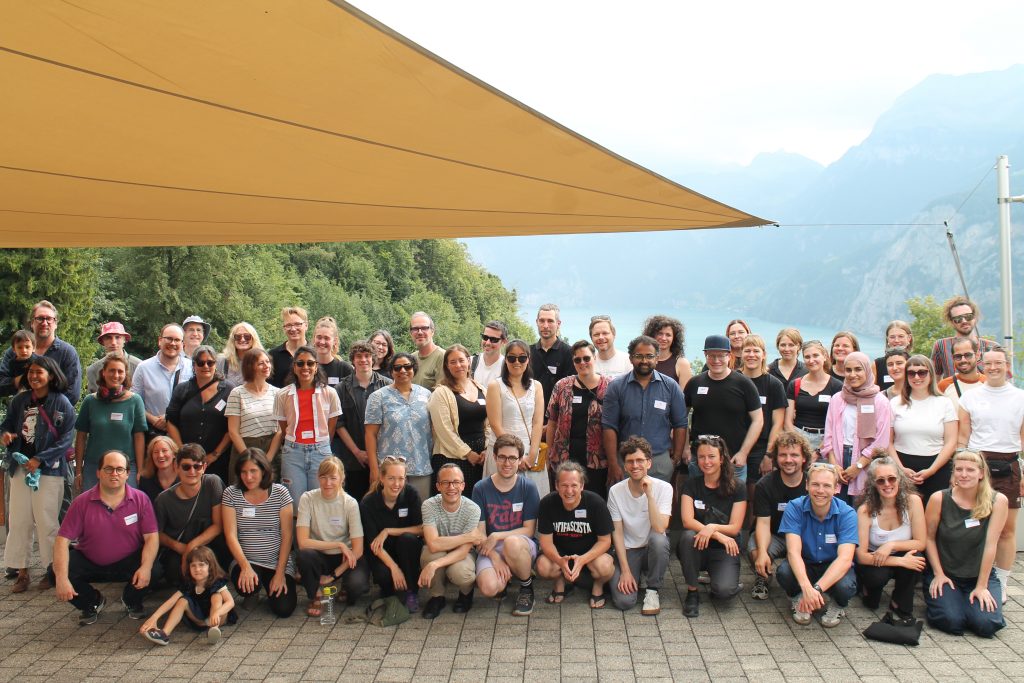
Figure 1: Group picture. Picture: Christiane Meyer-Habighorst.
Focus on Networking
Right at the outset, Karin Schwiter from the organizing team outlined the goals of the retreat during the welcome session on Monday afternoon: to gain new theoretical and conceptual insights, to build meaningful connections, and — last but not least — to enjoy the Swiss mountains. She highlighted that the retreat should be a place where newcomers to labour research feel just as welcome as the doyens of labour studies, and where everyone can learn from one another. In doing so, she set an inclusive and appreciative tone that shaped the following days. The retreat largely dispensed with traditional lecture formats, focusing instead on getting to know each other and the discussion of current theories and research needs in small groups.
Social reproduction as a key perspective
Thematically, the retreat was opened by Alessandra Mezzadri, Professor in Global Development and Political Economy at SOAS University of London, whose keynote highlighted the potential of a globally oriented labour research grounded in the perspective of social reproduction. In her talk, “Social Reproduction as Method: The Global Garment Chain as a Social Factory,” Alessandra Mezzadri drew on her research on the Indian garment industry to explain how research on global factory regimes must engage with workers’ everyday life contexts — their kitchens, sleeping quarters, and migration practices — in order to understand the conditions that make the corresponding production networks possible. Accordingly, she argued for a decolonization of labour studies, one in which social reproduction and “majority world” perspectives serve as the starting point.
Current fields of research in Labour Studies: migration, socio-ecological crisis, digitalization, care, global production networks, and militarization
As the substantive opening of the summer retreat, the keynote provided an important foundation for the conceptual and empirical debates that followed. The central format for this were six thematically organized streams, in which participants discussed current theoretical, conceptual, and empirical developments in their respective thematic fields across four workshop sessions each: (1) Labour and migration; (2) Socio-ecological crisis and labour; (3) Labour and digitalisation; (4) Care work and social reproduction; (5) Global production networks (GPN); and (6) Militarisation and labour. The fact that all participants took part in two of these streams not only allowed for deeper engagement with specific topics but also fostered exchange across different thematic areas. In addition, the retreat offered numerous opportunities for informal conversation — whether over lunch on the terrace with its Alpine panorama, on a walk with a view of the lake, or during coffee breaks in the flower-lined courtyard.
Alongside the streams, the retreat offered a varied side program. For example, a guided tour of the Swiss Holiday Park, followed by a discussion session, provided insights into working contexts and conditions in the Swiss tourism sector. Midweek, participants had an afternoon to enjoy the delights of the Swiss Alps as tourists themselves, either on a spectacular ridge hike or with a refreshing swim in Lake Lucerne. Last but not least, the mentoring program offered a valuable opportunity for exchange between more and less experienced researchers.
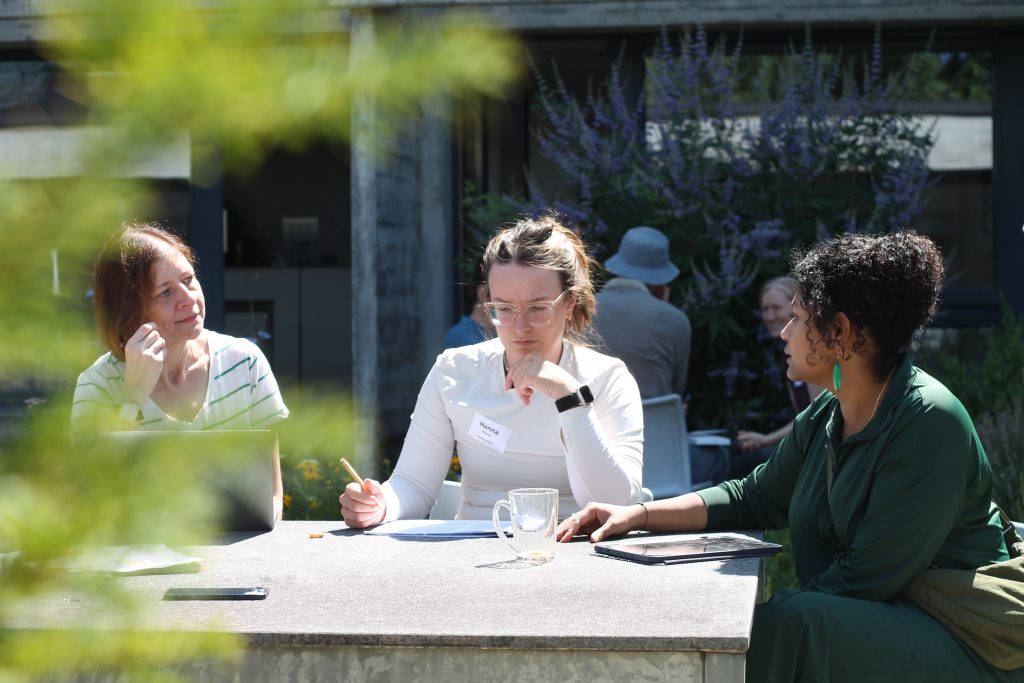
Figure 2: Exchange in small groups. Picture: Christiane Meyer-Habighorst.
Steps toward further institutionalization of Labour Studies
The retreat was organized by a ten-person team of members of the Labour Geography working group from Berlin, Bern, Bonn, Dublin, Frankfurt, Halle, and Zurich: Antonie Schmiz, Barbara Orth, Bettina Engels, Christiane Meyer-Habighorst, Jeremy Auerbach, Karin Schwiter, Michaela Doutch, Oliver Pye, Stephan Liebscher, and Yannick Ecker. The event was funded by the University of Zurich through the Global Champions Fund and the Labour Geography research group, as well as by Freie Universität Berlin through the Fund for Internationalisation.
For labour studies, the retreat was an important step toward the further institutionalization of the field. Many participants made plans for future collaborative thinking, writing, and research projects, as well as for follow-up meetings — for example, at the upcoming annual conference of the Labour Geography working group, taking place February 10–12, 2027, in Bonn.
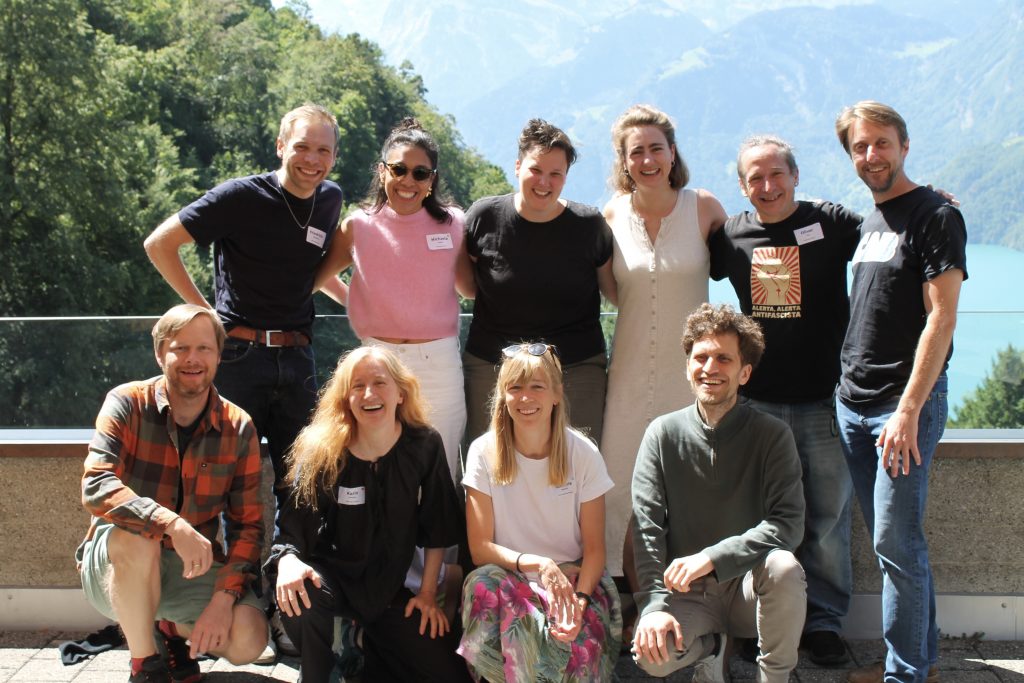
Figure 3: Organisation team (top f.l.t.r. Friedrich Trautmann, Michaela Doutch, Barbara Orth, Christiane Meyer-Habighorst, Oliver Pye, Jeremy Auerbach; bottom f.l.t.r. Stephan Liebscher, Karin Schwiter, Antonie Schmiz, Yannick Ecker; Bettina Engels is missing). Picture: Konstantinos Floros.
Christiane Meyer-Habighorst, Yannick Ecker, Karin Schwiter, Stephan Liebscher, Barbara Orth
This version is based on the German original and was translated with the support of Claude AI. The entire translation was reviewed and revised by the authors.